Breathless Season 2, Episode 6 Recap: A New Horizon
June 10, 2026Share this:
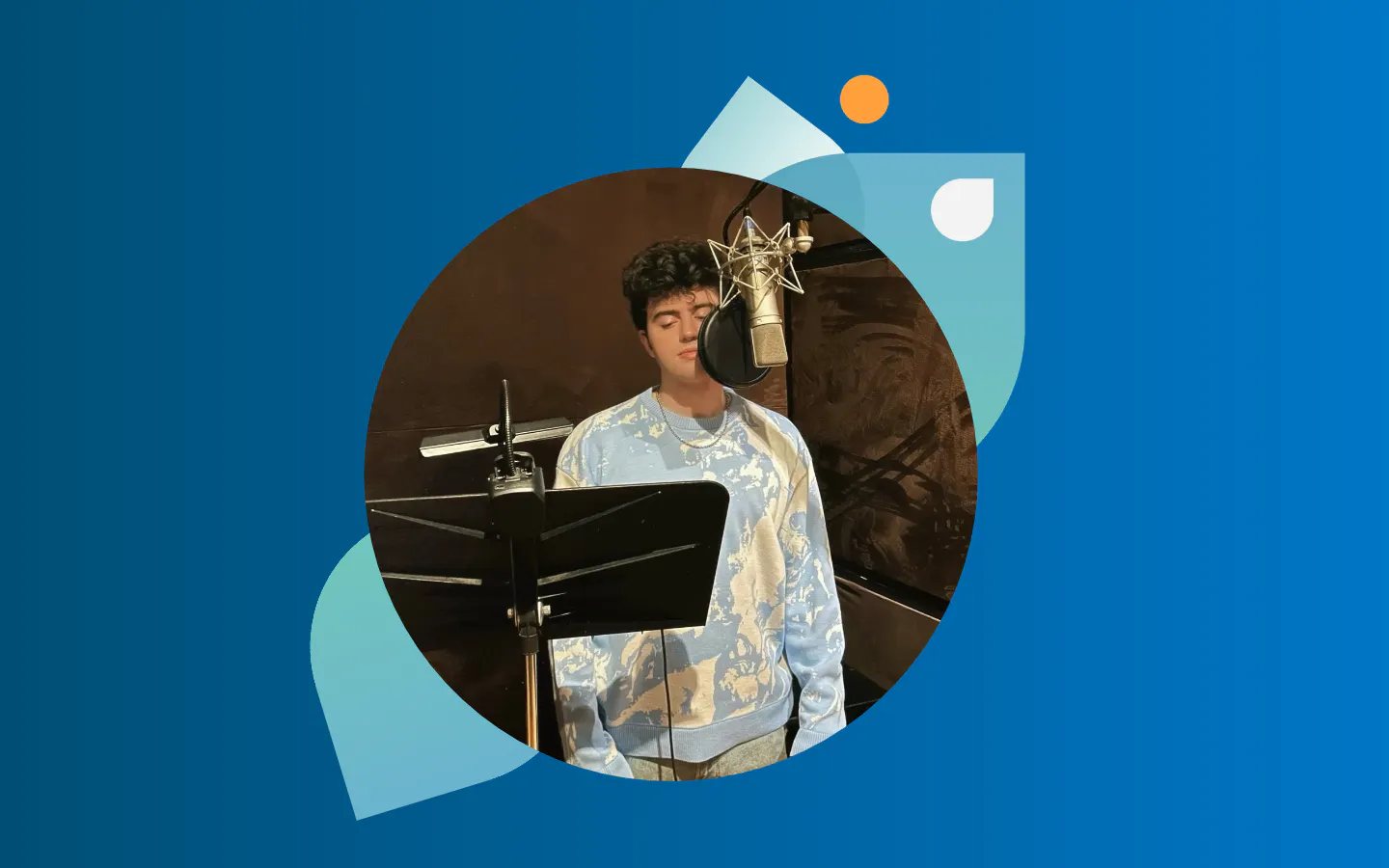
In the final episode of Breathless Season 2, the conversation turns toward what comes next. After a season exploring how life with cystic fibrosis is evolving, Jeremie reflects on the changing meaning of hope within the community.
Growing up, he recalls a pattern that was repeated throughout his life. Moments when a potential breakthrough would appear, followed by disappointment when it did not happen.
In recent years, however, something has begun to shift. For the first time, progress feels tangible and grounded in science. After a lifetime of hearing that a cure was coming, Jeremie finds himself beginning to believe it may be possible. With that belief comes a new set of questions. How do we get there, and how close are we?
Community in transition
To understand where the CF community is heading, Jeremie emphasizes the importance of understanding the present moment. The landscape has been reshaped, and we are now living through a period of significant transition.
Jeremie welcomes Cystic Fibrosis Canada’s President and CEO, Kelly Grover to join the conversation this episode. Kely shares that when she joined the organization in 2018, the focus was clear: ensuring access to Trikafta for Canadians. She recalls moments of advocacy, including traveling to Ottawa alongside families directly impacted by CF. One experience stands out, when she later saw a young man who had once been struggling, now excelling in his health after starting the treatment.
At the same time, she describes this moment as tempered. While many have benefited from these advances, there are still individuals who are not able to access or tolerate these treatments and represent where the focus must go next.
Jeremie also speaks with Dr. Paul Eckford, Chief Scientific Officer at Cystic Fibrosis Canada, who reflects on the decades of research that have led to this point. Since the 1960s, the organization has invested significantly in CF research, with Canadian researchers contributing to key developments in care and the early discoveries that led to Trikafta.
New Possibilities
For the remaining cystic fibrosis community who do not currently have options, the challenge is different. In these cases, the CFTR protein is not present at all. Dr. Bowen Li, a scientist at the University of Toronto, joins the episode to explain that for individuals with rare mutations, Trikafta is not effective because there is no protein for the drug to act on. As Jeremie reflects, Trikafta works by supporting a structure that is already there, like reinforcing a wobbly building. But for those with rare mutations, there is no building to stabilize.
This shift in understanding raises a different question: what do you do when there is “nothing to fix”? Instead of repairing what exists, the focus begins to move upstream, toward rewriting the original blueprint itself. This is where emerging technologies such as mRNA and CRISPR come into conversation. To make this idea more accessible, Dr. Li offers a simple analogy. DNA can be thought of as a cookbook stored securely inside a vault, known as the nucleus. The original book cannot be removed, but copies of individual pages can be made. These copies, known as mRNA, carry instructions that allow the body to function.
For a long time, this concept remained out of reach: mRNA is fragile, and early attempts to use it as a treatment failed because it would break down almost immediately inside the body. As a result, it remained more of a scientific idea than a practical solution. Over time, however, that has begun to change.
In the 1990s, scientists began tackling a major challenge: how to safely deliver genetic instructions into the body. Over time, they developed ways to stabilize and protect mRNA so it could survive long enough to work. That breakthrough research, published in 2005, would later help make mRNA vaccines possible and, in the context of cystic fibrosis, open the door to new treatment possibilities.
As explained in the episode, one way to think about this is like a cookbook. If there’s a typo in the original recipe, you don’t necessarily need to replace the entire cookbook. Instead, you can send an updated copy of the instructions directly to the kitchen.
For cystic fibrosis, mRNA offers a similar idea: delivering healthy instructions to cells so they can produce the protein the body needs.
But as Jeremie asks in the episode, how do you get something as delicate as mRNA into the lungs when they’re designed to keep foreign substances out? Between the mucus and the body’s immune defenses, reaching the right cells is a challenge.
The answer lies in how those instructions are protected. Scientists use lipid nanoparticles - tiny fat-based carriers that act like delivery vehicles, helping shield the mRNA and guide it to where it’s needed.
The conversation then explores another possibility: what if instead of sending corrected instructions over and over, you could fix the original blueprint itself?
Rewriting the blueprint
That’s where CRISPR comes in. Rather than repeatedly correcting the typo, CRISPR works by editing the DNA directly at the source of the mutation.
Jeremie asks where this idea even came from. Dr. Li explains that decades ago, scientists studying bacteria noticed unusual repeating patterns in their DNA but didn’t know what they meant. Later, they discovered bacteria were actually keeping a kind of record of viruses they had seen before. If the same virus returned, bacteria could recognize it and cut it apart using a protein called Cas9.
That discovery sparked a bigger idea: what if this natural system could be used to edit human genes?
Dr. Li shares that in 2012, researchers showed CRISPR could be programmed to find and edit specific pieces of DNA. Suddenly, gene editing became something scientists could begin putting into practice, not just imagining.
For cystic fibrosis, Jeremie points out that researchers already know where the problem starts: the CFTR gene. The challenge now is delivering these tools to the right cells in the lungs.
As the episode explores, mRNA and CRISPR offer two different possibilities. mRNA works like sending updated instructions to help cells function. CRISPR goes a step further by aiming to fix the original instructions themselves.
Jeremie then asks how artificial intelligence fits into all of this. Dr. Li explains that AI isn’t replacing researchers - it’s helping them work faster. Instead of spending years sorting through huge amounts of data, scientists can analyze information more quickly and focus on understanding what it means and where to go next.
Closing reflections
Jeremie closes the episode by reflecting on his experience where “hope,” when left unchecked, can feel like its own kind of cruelty. However, his conversations with Dr. Li and Dr. Eckford do not sound like what he had heard growing up. What he hears now are scientists who understand, at a molecular level, what exactly is broken and what tools may be needed to address it. That shift is what sets this moment apart from the kind of hope he had been exposed to before.
Jeremie mentions that he feels he got lucky, like many who are able to take Trikafta. At the same time, he recognizes that this is not a finish line. There are still people for whom Trikafta is not an option. There are still individuals being newly diagnosed, and families trying to make sense of what comes next, looking for something that can help them hold on. As Jeremie puts it, “we have to be that reason.”
Kelly Grover offers the final words of the season, noting that the future remains focused on improving the lives and wellbeing of people with cystic fibrosis. She emphasizes that this work requires continued support and collective effort, encouraging others to be part of what comes next. As she reflects, “we are not done.”