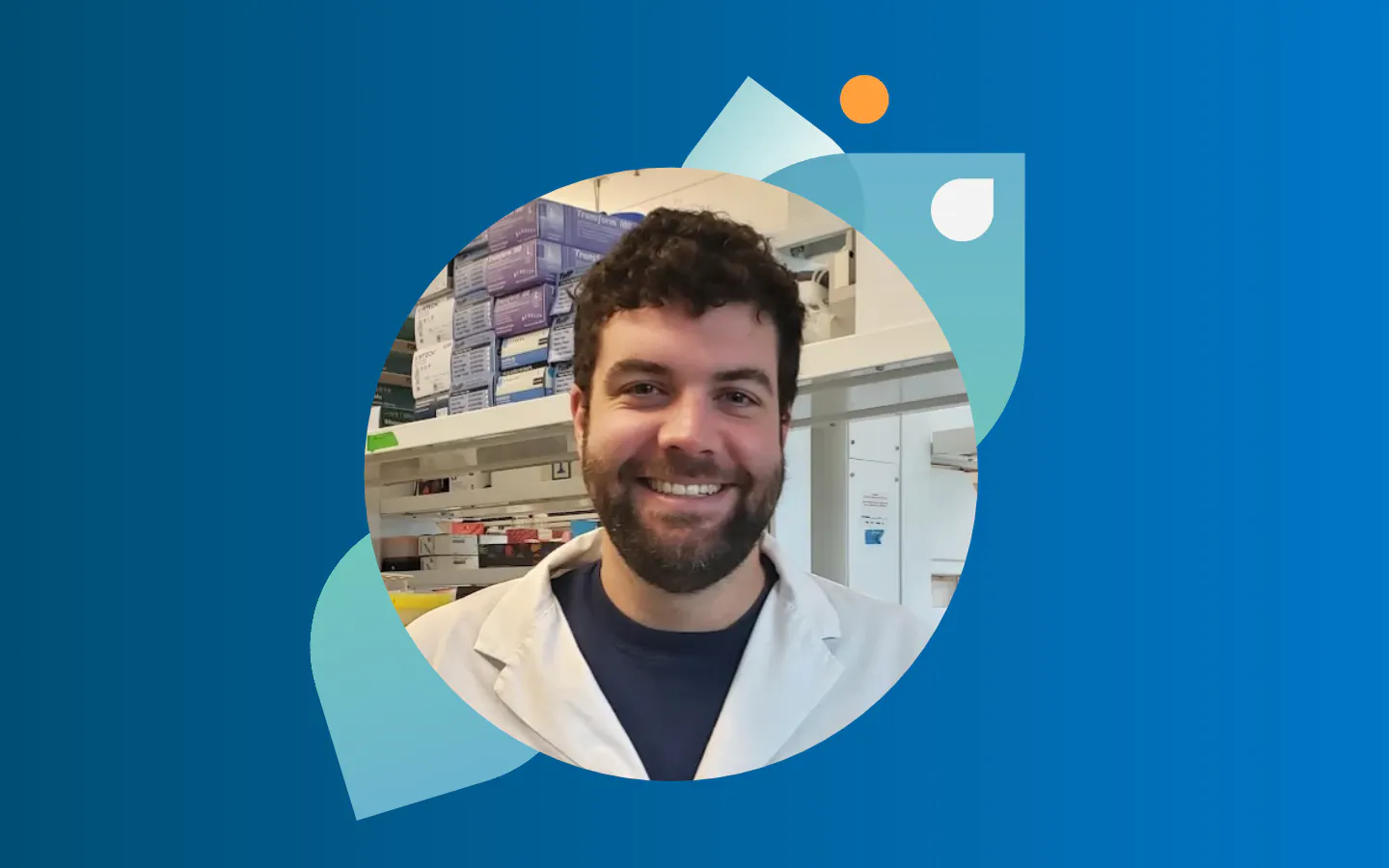
Dr. Amanda Morris’ Groundbreaking Look Inside Sputum
December 10, 2025Share this:

When Dr. Amanda Morris looks at a sputum sample from someone with cystic fibrosis (CF), she doesn’t just see mucus – she sees a map of bacteria. This map of bacteria is a key to better understanding, treating, and potentially predicting lung exacerbations in people with CF.
This bold approach to CF research is one of the reasons Dr. Morris was awarded a 2024 Cystic Fibrosis Canada Research Fellowship Award. As a postdoctoral fellow at SickKids Hospital, she’s studying bacterial infections inside the sputum samples collected from people living with CF. Her work is transforming how researchers think about chronic infections and the complex bacterial ecosystem inside the CF lung.
“We’re seeing a snapshot of the infection at the exact moment it’s coughed up,” she explains. “It’s a more realistic representation of infection inside the body.”
Dr. Morris’ project focuses on two of the most well-known and stubborn bacterial culprits in CF: Pseudomonas aeruginosa (PA) and Staphylococcus aureus (SA). These bacteria co-exist in up to 50% of patients with CF, yet researchers still don’t fully understand how they behave together or how their interactions affect treatment outcomes.
In CF research, it is common to throw bacteria together in test tubes to simulate infection. But are these lab models missing something?
“We always assumed [the bacteria] physically interact – like they are either fighting or helping each other,” Dr. Morris says. “But ex vivo, in real sputum, they don’t appear to be in the same place. Pseudomonas forms big clumps in one area, and Staphylococcus is somewhere else.”
This unexpected finding challenges the foundation of how many CF bacterial studies have been designed and opens the door for more accurate lab models that better reflect the CF lung environment.
She uses tools to not only identify the bacteria but also visualize molecules they secrete like Staphylococcus protein A (SpA), which may be influencing how P. aeruginosa grows.
“We found a correlation: the more SpA present in sputum, the more Pseudomonas we saw” Dr. Morris says. “This is what we are now looking into further.”
A Study Like No Other
Over three years, Dr. Morris is following patients across three CF centres: SickKids Hospital, St. Michael’s Hospital, and the McGill University Health Centre. Each patient provides sputum samples at multiple timepoints to allow the research team to track not just which bacteria is present, but how they change, how they react to antibiotics, and how they contribute to a worsening infection.
“It’s like a fingerprint of the infection!” she says.
This work could shape how future CF therapies are developed, help clinicians better predict when a person might be approaching an exacerbation, and refine how infections are modeled in the lab. These advances could make a big difference for the CF community.
Looking Ahead
Her path into CF research was driven by a long-standing fascination with the microbial world. With a strong foundation in studying how bacteria interact in complex environments, she found CF to be a compelling field where she could make a real difference in the lives of those with CF.
Dr. Morris was awarded a research fellowship grant from Cystic Fibrosis Canada in 2025 for her work at SickKids Hospital, which she notes has been an incredibly valuable experience. The access to clinical samples, advanced imaging tools, and a collaborative environment helped her connect her research with real-world impact.
She hopes to expand her research to include other harmful microbes like nontuberculous mycobacteria and explore how the immune system – especially neutrophils, which are immune cells responsible for detecting and destroying bacteria in the body – interact with the bacteria in the CF lung.
She would like to become an independent researcher, leading her own lab, and continue to explore respiratory infections.
“I’ve learned how to start something from the ground up,” she says. “This fellowship has prepared me to be a Principal Investigator and build something meaningful.”
Dr. Morris is doing something innovative and is already changing what we know about CF infections.
She wants the CF community to know something important:
“Every sputum sample matters. I know it’s not easy to give. But each one adds to this puzzle. Your contribution isn’t wasted. It’s helping shape the future of CF care.”
If you’ve ever wondered where your sputum sample goes, this is your answer – in the hands of a researcher who is determined to make it count.