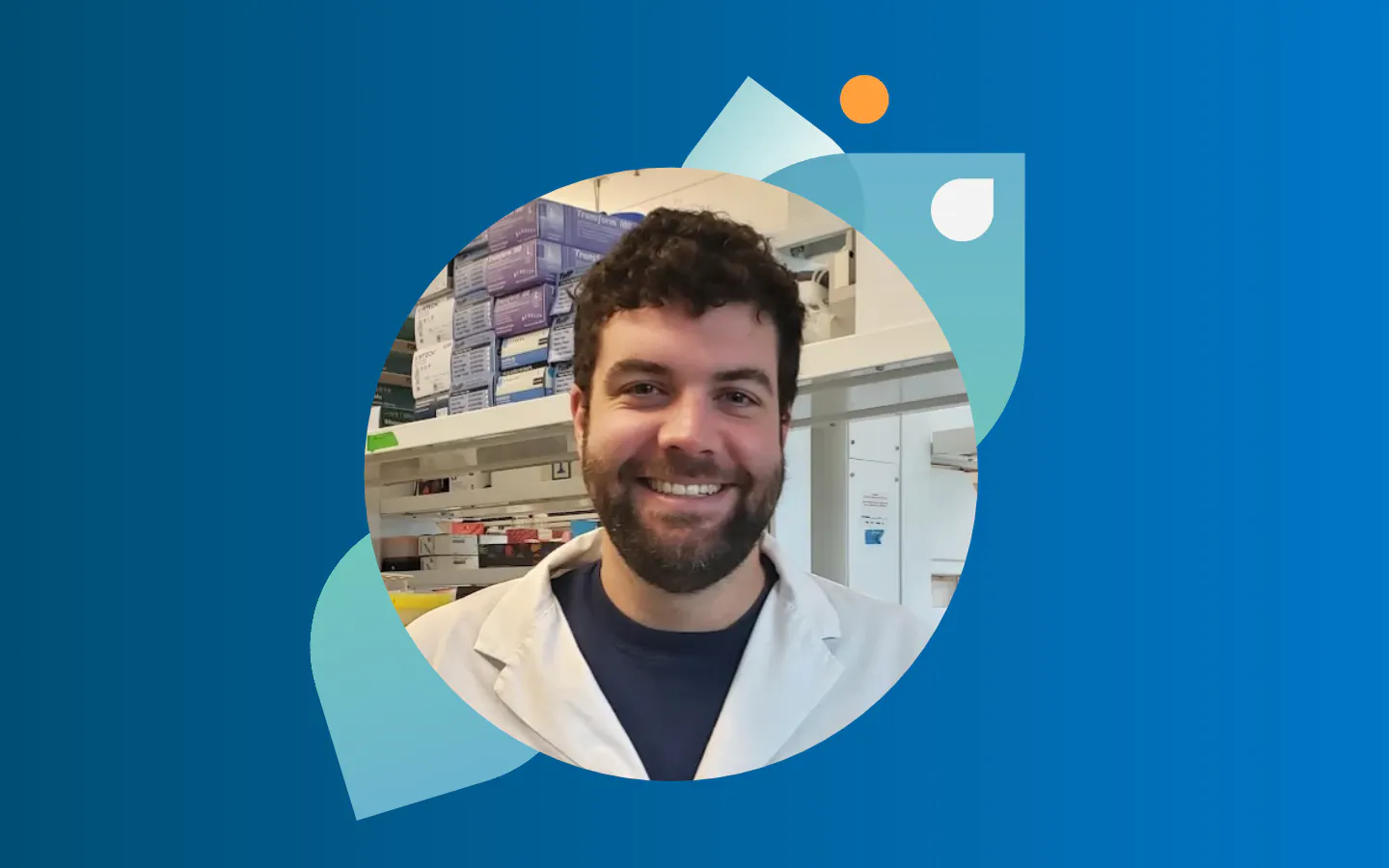
Dr. Christina Thornton: Digging into the Mystery of Candida
December 30, 2025Share this:

“We’ve been taught to ignore Candida. But maybe we shouldn’t”
Dr. Christina Thornton’s research into Candida – a naturally-occurring yeast often dismissed by clinicians as harmless – has led her to challenge decades of assumptions in cystic fibrosis (CF) care. As a Clinician-Scientist at the University of Calgary, she’s leading a research project funded by Cystic Fibrosis Canada exploring how this common fungus might actually be causing trouble for people with CF.
A Fungus in Disguise
Candida albicans is everywhere – on our skin, in our environment, and as Dr. Thornton’s team has confirmed, often in the lung of people with CF. Until recently, it’s been written off as a bystander, not a troublemaker.
“As clinicians, we don’t treat it. We’re taught it’s just there. Not causing problems,” she explains. “But what we’re seeing is that might not be true.”
Preliminary data from Calgary’s CF sputum biobank revealed that Candida doesn’t always appear in its non-problematic, yeast form. In many patients experiencing pulmonary exacerbations, Candida transitions into a more harmful “hyphal” state – a form linked with tissue damage.
“We found that nearly all exacerbations we looked at had Candida in this hyphal form,” she says. “That’s the bad form. But the clinical lab results don’t tell us that. They just say, ‘Candida present’ and we ignore it.”
Finding the Answers
For decades, we assumed that bacteria – Pseudomonas, Staphylococcus, and others – were to blame for pulmonary exacerbations in CF. But environmental triggers, inflammation, and fungi are gaining attention as important players.
“There’s clinical data from previously published chart reviews showing Candida is associated with worse lung function,” she explains. “But is Candida a cause or just a consequence of antibiotic use? We don’t know yet. That’s what this project aims to uncover.”
With the rise of CFTR modulator therapies, like Trikafta, the microbial landscape of CF lungs is shifting. This research couldn’t come at a more important time.
Dr. Thornton’s team is approaching the problem from multiple angles. They’re using molecular techniques, culture-based assessments, and cutting-edge models like “lung-on-a-chip", a system that mimics the human lung’s immune response. This system recreates key features of a real lung, including airways, blood vessels, and immune cells, allowing her team to safely study how Candida interacts with lung tissue in a lab setting.
“We’re looking at how Candida interacts with other microbes. Does it supress good bacteria? Does it help pathogens thrive? These are big questions with clinical implications.”
Dr. Thornton’s research has the potential to reshape how fungal infections are understood and managed in CF care. This could open the door to antifungal treatments as an alternative to repeated doses of antibiotics for certain patients. Achieving that vision begins with increased awareness and more detailed diagnostic tools that go beyond simply reporting the presence of Candida.
The Early Days
Dr. Thornton’s journey in CF research began as an undergraduate in microbiology at the University of Calgary. She started in the lab of Dr. Michael Surette, knowing nothing about CF beyond Celine Dion’s advocacy work. Her early experiences left a lasting impact.
“I remember this incredibly sick patient in the hospital as I was collecting a sputum sample for the research project, on IVs, thanking me for studying their disease. That moment stuck with me.”
Today, a CF physician and 2024 Marsha Morton Early Career Investigator award recipient – awarded to the top-ranked early career investigator project determined by the scientific review panel – Dr. Thornton is still inspired by her patients. Her patients often ask her what she’s working on. When she tells them about her work on Candida, they’re curious and grateful.
Broader Change
Beyond CF, Dr. Thornton sees the lessons from this research informing other diseases, like non-CF bronchiectasis. She co-founded a national registry for this lesser-known condition, modeling it on the CF Registry’s success.
“CF is a leader in patient-centered research. We’ve learned so much, and now we can apply those lessons to diseases that haven’t received the same attention.”
As a member of the Inflammation Research Network, she meets weekly with a diverse group of researchers and clinicians. This fueled her passion for collaborating with colleagues outside of CF, like ICU clinician scientists and immunologists, ultimately sparking her current CF research.
“Science is better with friends”
Dr. Thornton’s research is still in progress, but it’s already reframing how the CF community understands the fungal components of the airway. With the support of Cystic Fibrosis Canada, she’s bringing new insights and perhaps new treatments to the forefront of CF care.
“Every exacerbation is a clue,” she says. “And I think we’re getting closer to solving the puzzle.”