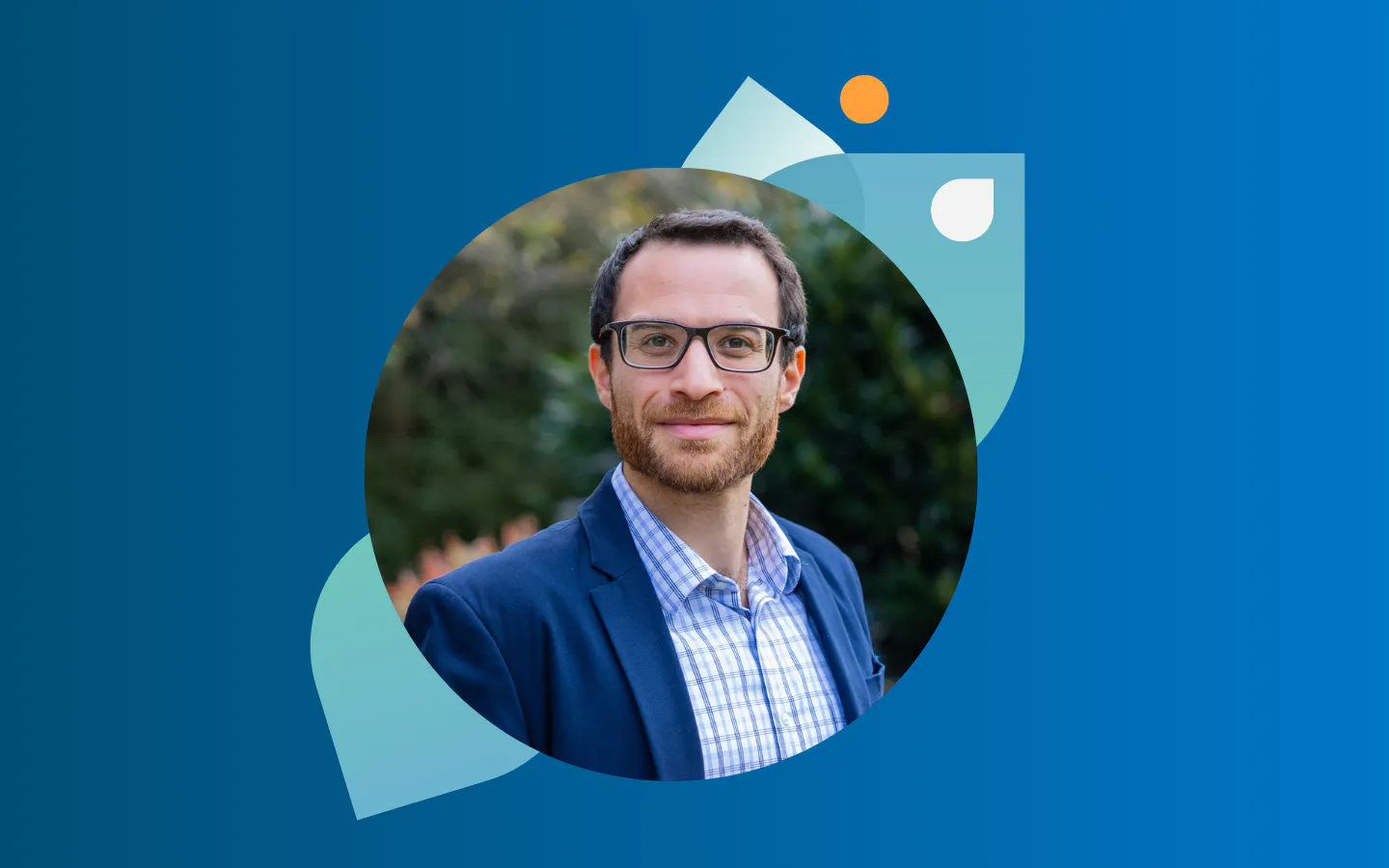
Dr. John Hanrahan: Hope for Rare CF Mutations
March 26, 2026Share this:
Over the last decade, transformative drugs like CFTR modulators have changed life expectancy and quality of life for about 90% of people with CF. But what about the remaining 10%? Thanks to a joint investment from Genome Quebec and Cystic Fibrosis Canada, Dr. John Hanrahan, Associate Investigator at the Research Institute at the McGill Univeristy Health Centre, is zeroing in on a population that has often been left behind – people living with rare CF mutations.
The Goal
One of the most common “rare” mutations in Quebec is 621+1G>T, a splicing mutation that drugs currently available cannot help. Dr. Hanrahan’s research project focuses on designing a gene-editing solution for exactly this type of mutation – targeting the tissue at the DNA level.
Dr. Hanrahan and his team are exploring a cutting-edge technique called base editing, which allows researchers to change a single letter in a person’s genetic code.
“If you can correct the sequence in the basal cells, then it would be a permanent correction,” he explains. “This would be the ultimate goal – to actually cure the problem.”
Basal cells are airway stem cells that renew themselves and regenerate all the other cells that line the airway. If gene editing works in these cells, the correction could last a lifetime.
While 621+1G>T is their starting point, the approach could be applied to other rare CF mutations in the future. This means this work has the potential to benefit many people with CF still waiting for a treatment.
Cracking the Delivery Problem
Delivering gene-editing tools in the right airway cells has been one of the biggest barriers to progress. Airway surface cells – the ones that are easily reached – are regularly shed and replaced. That’s why targeting the basal cells underneath is needed for longer-lasting effects but reaching them isn’t easy.
The solution? Using a special molecule that temporarily loosens the “tight junctions” – the glue-like structures that hold surface cells together. This creates a small gap between the cells, forming a temporary doorway to reach the basal cells underneath. These molecules, originally developed for cancer treatment, have never been tested in airways before. If they work, it could be a game-changer.
Dr. Hanrahan’s team is also developing custom-made lipid nanoparticles (LNPs) - tiny, fat-based bubbles that safely carry cargo to cells. Each LNP is small enough to pass through the temporary gaps opened by the junction-disrupting molecules. Once inside, they will carry the gene-editing tools to where it's needed.
If successful, it could allow for more precise, efficient delivery of gene therapies to the long-lasting cells that matter most.
A Team Effort
This ambitious research project is powered by collaboration across Canada. Dr. Hanrahan has teamed up with colleagues at the University of British Columbia who are experts in gene-editing. While the base-editing tools are being developed in Vancouver, the airway cells studies and sequencing are taking place at Montreal.
“We’ve been sending cells to Vancouver for a year and a half... when this came up, I said why don’t we just collaborate?”
The funding from Genome Quebec and Cystic Fibrosis Canada has made this partnership possible – supporting salaries, equipment, and vital experiments that wouldn’t happen otherwise.
Hope on the Horizon
The research project is still in its early stages, with the first phase focused on testing delivery methods. Genome editing tools will come next. Over the next three years, Dr. Hanrahan and his team will aim to refine their techniques and demonstrate that gene correction in basal cells is possible.
And while there’s still work to do before this research reaches clinical trials, the impact could be enormous.
A Message to the CF Community
Dr. Hanrahan has spent decades in CF research, from before the CFTR gene was even discovered. He’s seen the field evolve and he’s stayed focused on finding solutions.
“It’s all about the disease and the chloride channels that cause it. That’s been my interest since day one.”
When asked what message he wants to share with individuals and families impacted by rare CF mutations, he says:
“Don’t give up hope. Everybody is aware that the drugs only help certain people, and that everybody needs to be taken care of. That’s the reason for focusing on these mutations.”
Dr. Hanrahan’s research is a powerful reminder that scientific progress doesn’t happen overnight – it’s built through years of dedication, collaboration, and a shared commitment to improving lives. With new tools like base editing and lipid nanoparticles, researchers are now closer than ever to bringing genetic treatments to people with CF that has been out of reach.