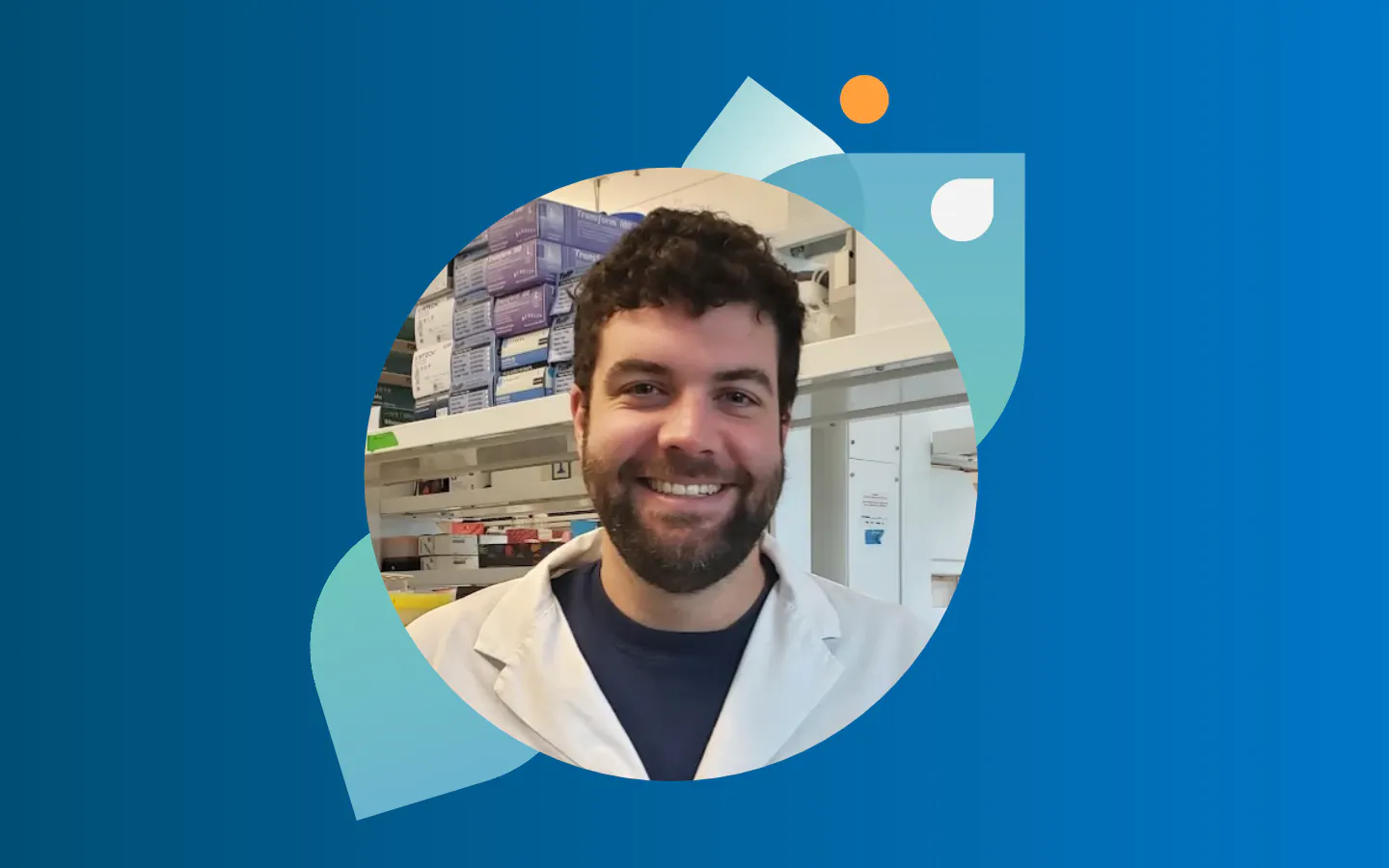
Dr. Justine Mathe: The Hidden World of Bacteria
January 26, 2026Share this:

Dr. Justine Mathe is breaking new ground by looking deep inside the lungs of people with cystic fibrosis (CF), specifically those who underwent lung transplantation before highly effective modulator therapy (HEMT) became widely available. By studying these precious, rare lung tissue samples, obtained thanks to the Quebec Respiratory Tissue and Cell Biobank of the CR-CHUM, she hopes to uncover how bacteria interact with lung cells to drive disease progression.
Her research project as a postdoctoral fellow in Dr. Dao Nguyen’s lab at McGill University uses cutting-edge, single-cell and cellular mapping technologies – tools that allow researchers to see not just which cells are present, but how they are functioning and exactly where they are located within the tissue. That’s a huge step beyond what traditional sputum samples or bulk tissue analysis can offer.
“CF lung disease is very heterogenous,” she explains. “There are regions of the lung that are severely damaged while others are less affected. We want to understand how the bacteria present in different areas influence this variation and impact the severity of the disease.”
This level of detail could be key to the development of more personalized treatments in the future. Even in the short term, identifying patterns of infection and immune response could help clinicians make more informed decisions about which antibiotics and other treatments to use.
Although CFTR modulators like Trikafta have transformed the CF landscape, not everyone benefits from it.
“It’s great that many patients no longer need a lung transplant,” she explains. “At the same time, infections still play a big role in CF, even for those on Trikafta, and many patients are still living with severe disease.”
Her study zeroes in on bacterial species like Pseudomonas aeruginosa (PA) and Staphylococcus aureus (SA), known culprits in CF lung infections, but she’s also on the lookout for surprises.
“We might find unexpected species. This project allows us to look at all bacteria that are there, not just the usual suspects.”
Funding the Journey
Dr. Mathe’s passion for microbial research began during her PhD when she studied various lung diseases, including CF, Chronic Obstructive Pulmonary Disease (COPD), and idiopathic pulmonary fibrosis. But it was the complexity and variability of CF that truly kept her hooked.
“I’ve always been fascinated by the lungs,” she says. “I wanted to learn more about how these bacteria might be influencing the disease.”
Receiving the 2024 Jennifer and Robert Sturgess Fellowship award from Cystic Fibrosis Canada – awarded to the top-ranked fellowship by the scientific review panel – was a proud moment for Dr. Mathe.
“For me, it means that my research is meaningful,” she says. “It’s a huge accomplishment.”
Beyond the personal recognition, what keeps her going is the potential to make a real difference.
“The progress we’ve seen in CF over the last 10 years is incredible,” she says. “That gives me hope that we can continue to improve the quality of life for many people with CF, including those who aren’t eligible for CFTR modulator therapy.”
A Day in the Life
Dr. Mathe’s days are a balance of hands-on lab work and in-depth data analysis. She is either preparing frozen samples, sequencing bacterial cultures, or coding on her computer.
“I wanted to learn new things in this fellowship, and I definitely am.”
She’s also gaining valuable perspective from the clinical side, thanks to a special program that allows her to spend time in CF clinics.
“Meeting patients and talking with them about their daily challenges gives me a much clearer view of what CF really is. It’s very motivating.”
Looking ahead, Dr. Mathe plans to keep studying how bacteria in the lungs affect people with CF. She wants to understand why some people get sicker than others and how we can use that information to help them.
“There’s still so much to learn!”
Understanding the microbial interactions in the CF lungs could unlock massive changes in how we treat the disease. By zooming in on how specific bacteria affect different lung cells, Dr. Mathe’s work is paving the way for new treatments. Thanks to researchers like Dr. Mathe, that future feels closer than ever.