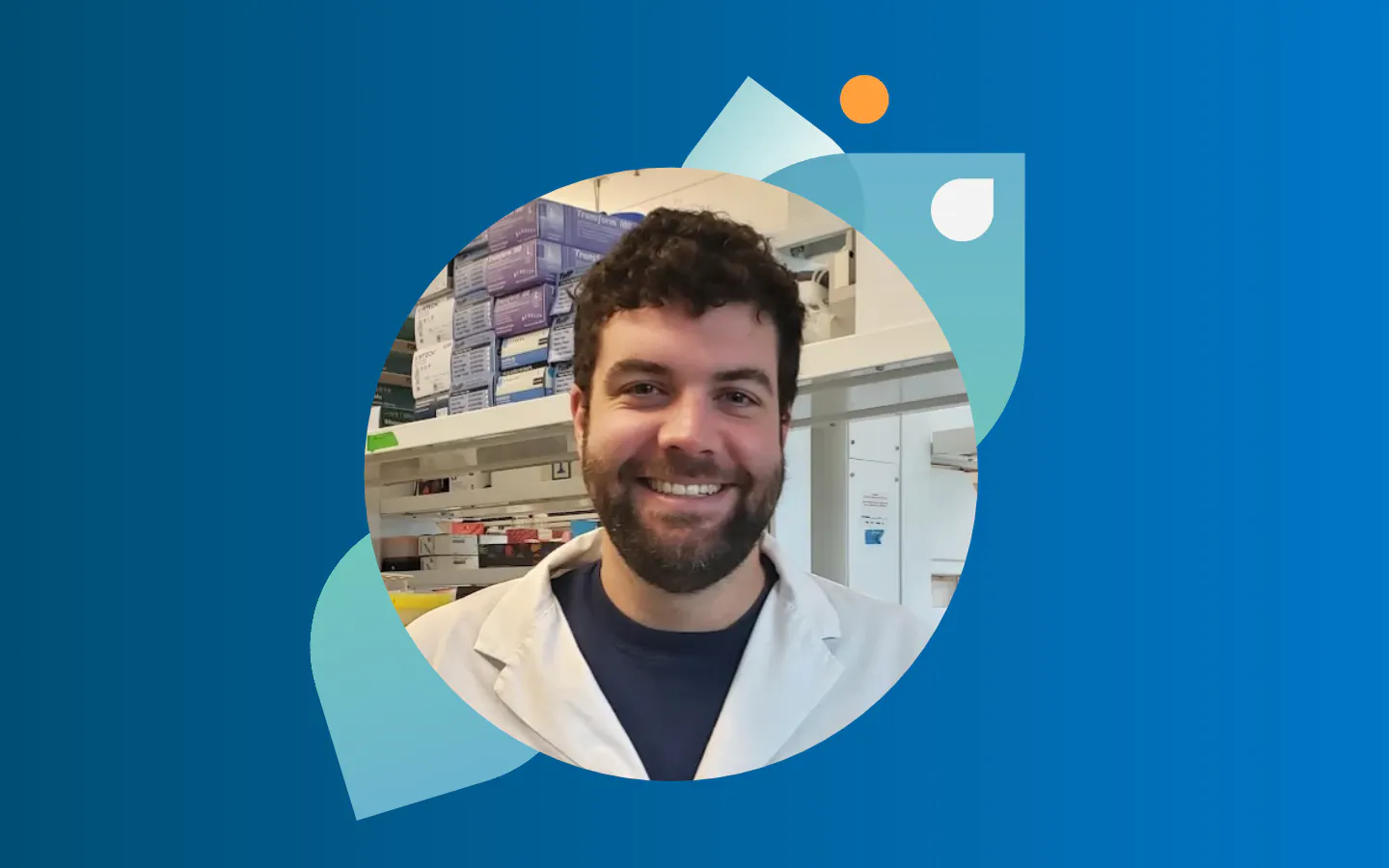
Dr. Sarah Wootton: Harnessing Gene Therapy to Stop Infections
January 13, 2026Share this:

Imagine a future where people with cystic fibrosis (CF) never become colonized with Pseudomonas aeruginosa (PA), a major cause of chronic lung infections and worsening lung function. Thanks to Dr. Sarah Wootton’s research, that future may be closer than ever.
With the funding support of Cystic Fibrosis Canada, Dr. Wootton, Associate Professor in the Department of Pathobiology at the University of Guelph, made exciting strides in a gene therapy approach designed to stop one of CF’s most stubborn problems before it starts: lung infections.
“If people don’t get colonized with bacterial infections, that’s half the battle”
The 2023 Breakthrough
Dr. Wootton’s lab has long worked with adeno-associated virus (AAV), a harmless virus used as a delivery vehicle to carry genetic material into cells. In past projects, they have used this technology to produce antibodies from muscle tissue as a defence against viruses like Ebola and bacteria like Clostridioides difficile. The 2023 Seed Grant award – one-year of funding from Cystic Fibrosis Canada aimed at helping researchers test new ideas and generate preliminary data – allowed her to push that innovation further. This time, creating a complex, powerful antibody known as secretory IgA, and expressing it directly in the lung.
Secretory IgA plays a role in protecting mucosal surfaces like the airway. It’s the body’s natural defense system that surrounds and neutralizes pathogens before they can take hold. But making secretory IgA outside of the body is incredibly difficult due to its complex structure. That’s why Dr. Wootton’s solution of having the lung itself produce these antibodies is compelling.
“Nobody as far as I know, is commercially making secretory IgA because it’s so complex,” she says. “If we can successfully produce sIgA in the host, it could be harnessed for a wide range of therapeutic and prophylactic applications.”
With the 2023 Seed Grant funding, her team has successfully converted one of the most promising anti-Pseudomonas antibodies into the IgA format and developed a novel AAV platform to deliver the necessary genes into the lungs of mice. This intricate process transports these antibodies to the lung mucus, mimicking how the body normally secretes IgA.
Animal studies showed early success, proving the antibody’s potential to prevent infection. The next challenge? Making sure the immune system doesn’t have a reaction and helping the antibodies last longer in the body.
The Next Steps
Now, with her 2024 Basic Science and Clinical Research Grant funded by Cystic Fibrosis Canada, Dr. Wootton is pushing her research even further. She is moving from proof-of-concept toward strategies that could work not just before infection, but after colonization has already occurred.
“Everything we’ve done so far has been before exposure to Pseudomonas,” she explains. “But we want to see if we can also use this therapeutically after colonization.”
This includes delivering the therapy intranasally or inhalation, like how most treatments are administered, testing in polymicrobial environments, since Pseudomonas in CF often hides in sticky biofilms that are resistant to antibiotics, and exploring how these antibodies actually work.
“We want to understand the effector functions – how these antibodies might call in other parts of the immune system to help”
Understanding the Bigger Picture
This research represents an exciting step in the fight against Pseudomonas aeruginosa (PA). Instead of relying on antibiotics, which often loses effectiveness over time, this therapy teaches the body how to fight the bacteria directly. For people with CF, who experience chronic Pseudomonas infections, it could offer a new way to manage or even eliminate persistent infections.
While Pseudomonas aeruginosa, is the current focus, Dr. Wootton’s platform could eventually be adapted to target other pathogens that affect people with CF, like Staphylococcus aureus (SA) or Burkholderia. Her lab has already created antibodies that target multiple bacteria at once.
“We’ve made bispecific antibodies for two Pseudomonas targets,” she says. “But we could combine them with others for a dual-pathogen approach.”
The platform could help address the rising concerns about antibiotic resistance by offering a non-antibiotic method of infection control.
Inspired by the CF Community
Due to her extensive background in gene therapy, Dr. Wootton initially felt like an “outsider” to CF research. But after seeing the real-life impact of CF therapies and hearing from donors like John and Marlene Mason, her connection to the community deepened.
“I feel honoured to be part of this community,” she says. “The people I’ve met, the patient stories I’ve heard – they’ve left a lasting impression. It reminds me every day why this work matters.”
She’s also inspired by the recent momentum in lung-targeted gene therapy, with companies investing in lung delivery platforms.
“People are finally seeing the lung as a target organ for gene therapy,” she says. “That opens the door for this kind of work to become a reality.”
While she humbly describes herself as a gene therapy researcher first, her dedication to the CF field is clear.
Dr. Wootton’s long-term goal is apparent: offer people with CF a way to avoid or eradicate Pseudomonas infections.
“There’s still a lot of optimization to be done,” she explains. “But if this works, it could change the way we protect people with CF from infections.”
In a world where Pseudomonas infections are no longer a constant threat, daily life with CF could look very different. Dr. Wootton’s research is making this possibility within reach.