Élise’s Story: How Clinical Trials Gave Me Back My Future
May 20, 2026Share this:
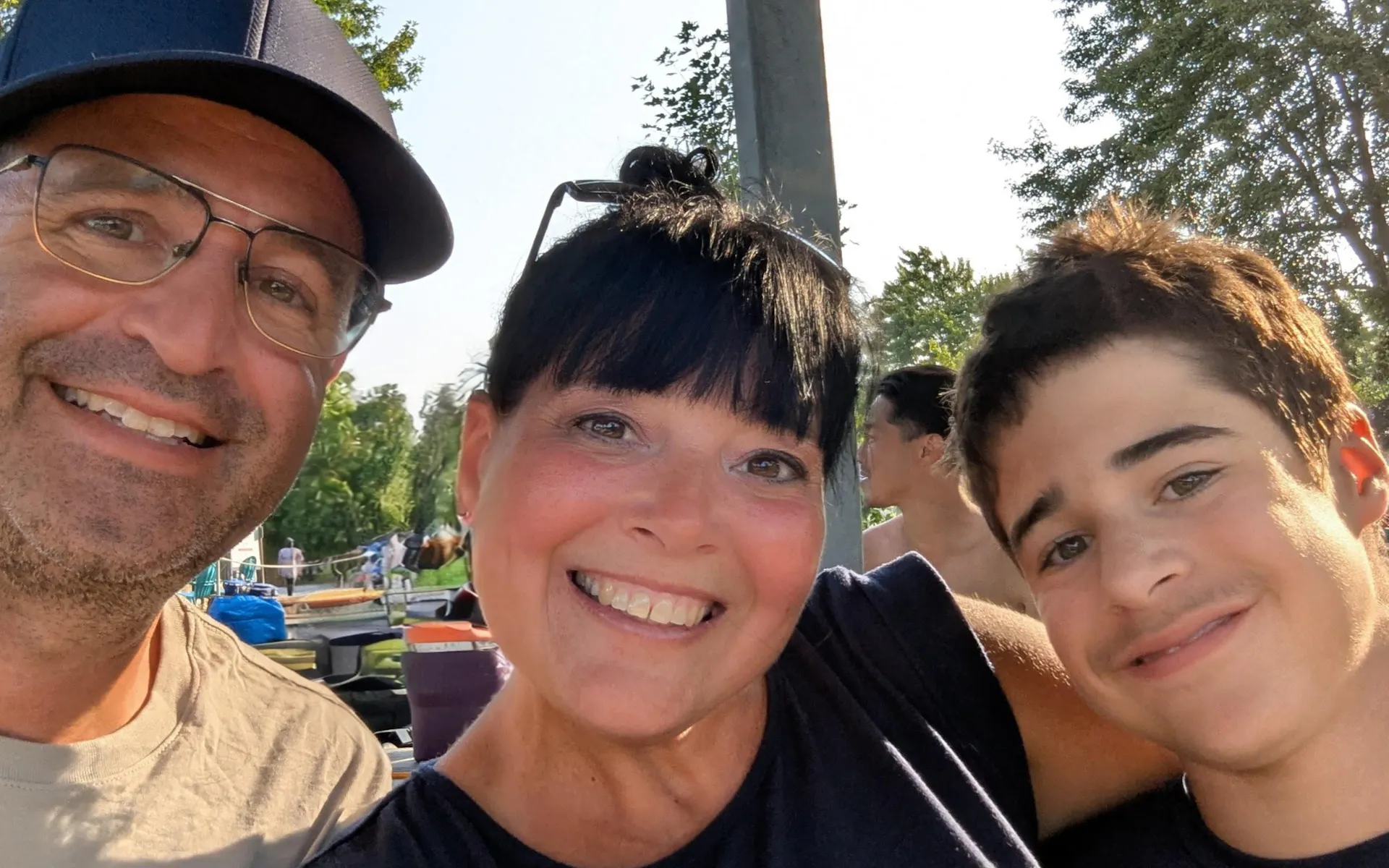
When I was born in 1978, cystic fibrosis came with little hope. My parents were young, scared, and suddenly facing a future that few people truly understood.
They raised me just the same as my siblings, aware of my limits but never making me feel different. I understood why I took so many medications and treatments, and that CF could be life-shortening, but I didn’t live in fear.
Clinical trials have always been part of my life. My parents agreed to studies while I was young to hopefully benefit me but also the future children that could be in my situation. I have participated in clinical trials for medications that are now part of many everyday routines. From Urso, to Tobramycin inhalation solution, genetic tests, physical exercise studies, Pulmozyme, Symdeko and many antibiotics.
“If there was a study that made sense for me, I wanted do it.”
That was my mindset when I began attending the adult CF clinic at CHUM in Montreal. In 2014, my clinic team suggested that I participate in a clinical trial for a new drug, a CFTR modulator. I did the trial for seven years while the impacts of the modulator were assessed. In 2022, it was suggested that I participate in a new study for a once daily drug, now known as Alyftrek.
“Results I’d never imagined Possible”
Before my trial in 2014, I gave birth to my son and prior to that, my health had been fairly stable. After, his birth my health began to decline rapidly. Complications, surgery, and repeated lung infections followed. My lung function dropped from 75% to 30%. I was hospitalized, often spending more time on intravenous antibiotics than at home. I was told that a lung transplant might soon be my only option.
Within days of starting the Alyftrek trial, I felt changes. Some call it a “purge”, and it’s real. Today, my lung function is about 58%. I have energy again. I haven’t had a lung infection or needed IV antibiotics in four years. Medications have been reduced. There is no more talk of transplant lists or end-of-life planning. Instead, I’m talking about living.
“Some people worry that clinical trials are risky or experimental in the wrong way”
Participating in a clinical trial didn’t mean abandoning my care team or traveling far from home. My trial was conducted at the same hospital where I already received CF care, by people who knew me well.
Every study I joined was carefully explained, strictly monitored, and entirely voluntary. I was never pressured to stay in a study that wasn’t right for me. The research teams followed protocols closely and always put my safety first.
My most recent trial started with a full assessment day—blood tests, sweat tests, lung function tests, and monitoring—to establish a baseline. After that, I was closely followed through clinic visits and phone calls. Over time, as my condition stabilized, visits became less frequent.
Yes, participation required time. But it was far less time than the hospitalizations and sick leave I had needed before.
I also want people to know this: travel expenses were reimbursed, and participants were compensated for their time. That was a welcome surprise to me.
“If you are thinking about participating in a clinical trial, my message is simple: go for it.”
Read the consent forms. Ask questions. Talk to your care team. Understand that you can stop at any time. Clinical trials are safe, carefully supervised, and led by people who want the same thing you do, a better future for people with CF.
Even if a study doesn’t benefit you directly, it may change everything for someone else. Every breakthrough we have today exists because people before us said yes.
For me, clinical trials didn’t just extend my life. They gave me back my future. And that is worth it every time.
View our clinical trial finder tool to check out what CF related clinical trials are happening in Canada now.